

Model-Specific Service
Jeep Wrangler Service in Las Vegas, NV
Factory-trained technicians, genuine Mopar parts, and maintenance built around Mojave heat, sand, and rock. Keep your Wrangler trail-ready from Red Rock Canyon to the daily commute.
 Trail-Ready Maintenance
Page Overview
Overview
- What is the Recommended Maintenance Schedule for a Jeep Wrangler?
- Understanding Wrangler Engine Oil Types and Synthetic Requirements
- How Often Does the Wrangler 4xe Hybrid System Require Battery Coolant Replacement?
- Towing Specs and Warranty Protection: Do You Need a Transmission Cooler?
- Maintaining Style and Utility: Service Differences Between Sport and Rubicon Trims
- Quick Answers to Common Jeep Wrangler Maintenance Questions
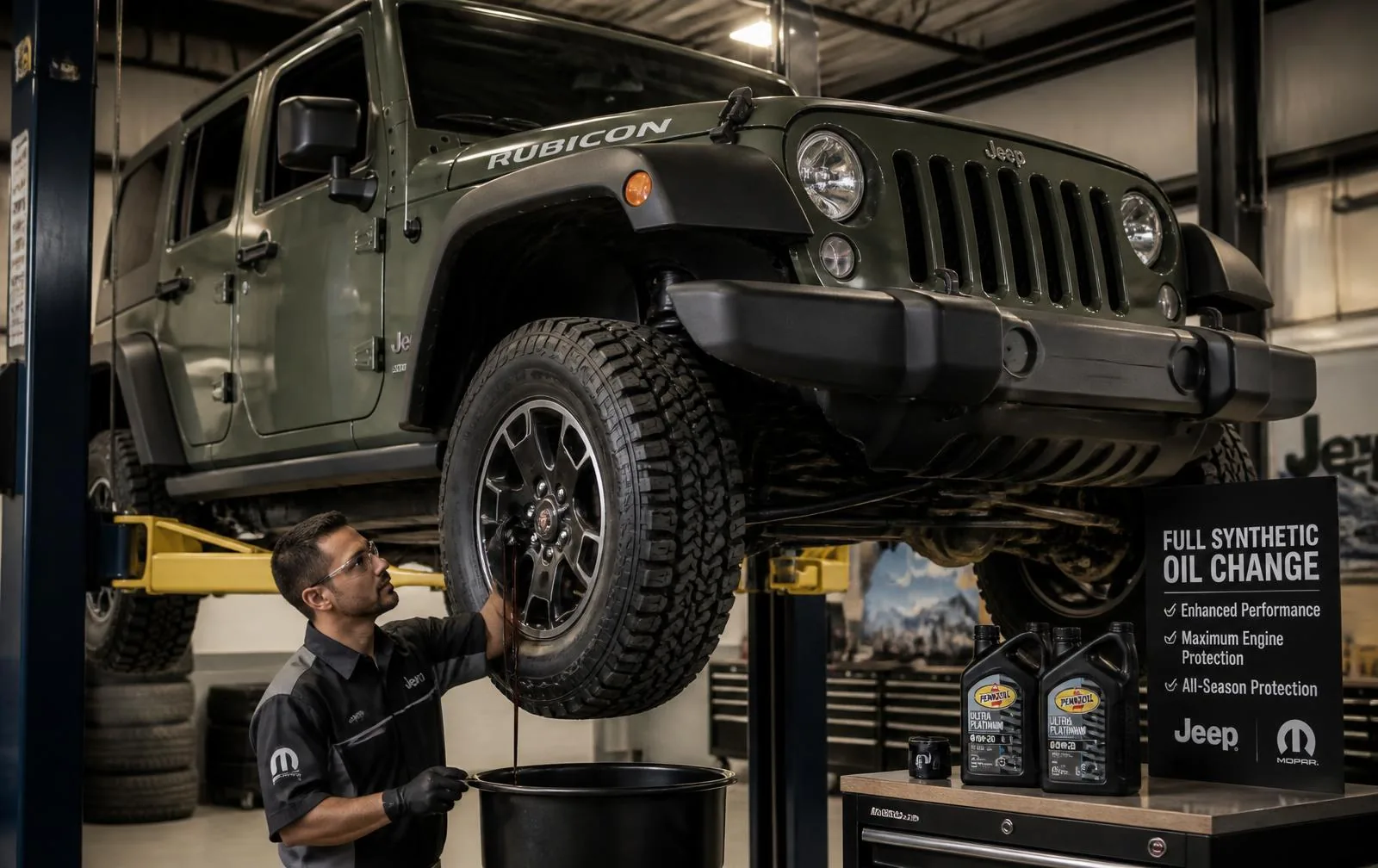
Desert-Tested Care
Built for Desert Durability
The Mojave Desert presents some of the most punishing driving conditions in the country. Sustained summer heat, fine blowing sand, and rugged rocky trails can accelerate wear on your vehicle's critical systems. Keeping your 4x4 operating at peak performance requires specialized maintenance tailored to these local environmental demands. Whether you are navigating dry washes near Red Rock Canyon or enduring daily stop-and-go traffic on the highway, regular inspections and fluid changes prevent minor wear from turning into major mechanical failures.
Our certified technicians understand how desert heat degrades vital fluids, ruins rubber seals, and clogs filters. To help you stay ahead of these harsh conditions, we offer online options to schedule your service today1. Our team uses state-of-the-art diagnostic equipment to scan your vehicle's onboard computers, check battery health, and inspect steering linkages that take a beating on local rocky terrains. From standard fluid flushes to a comprehensive multi-point inspection, we ensure your vehicle remains trail-ready.
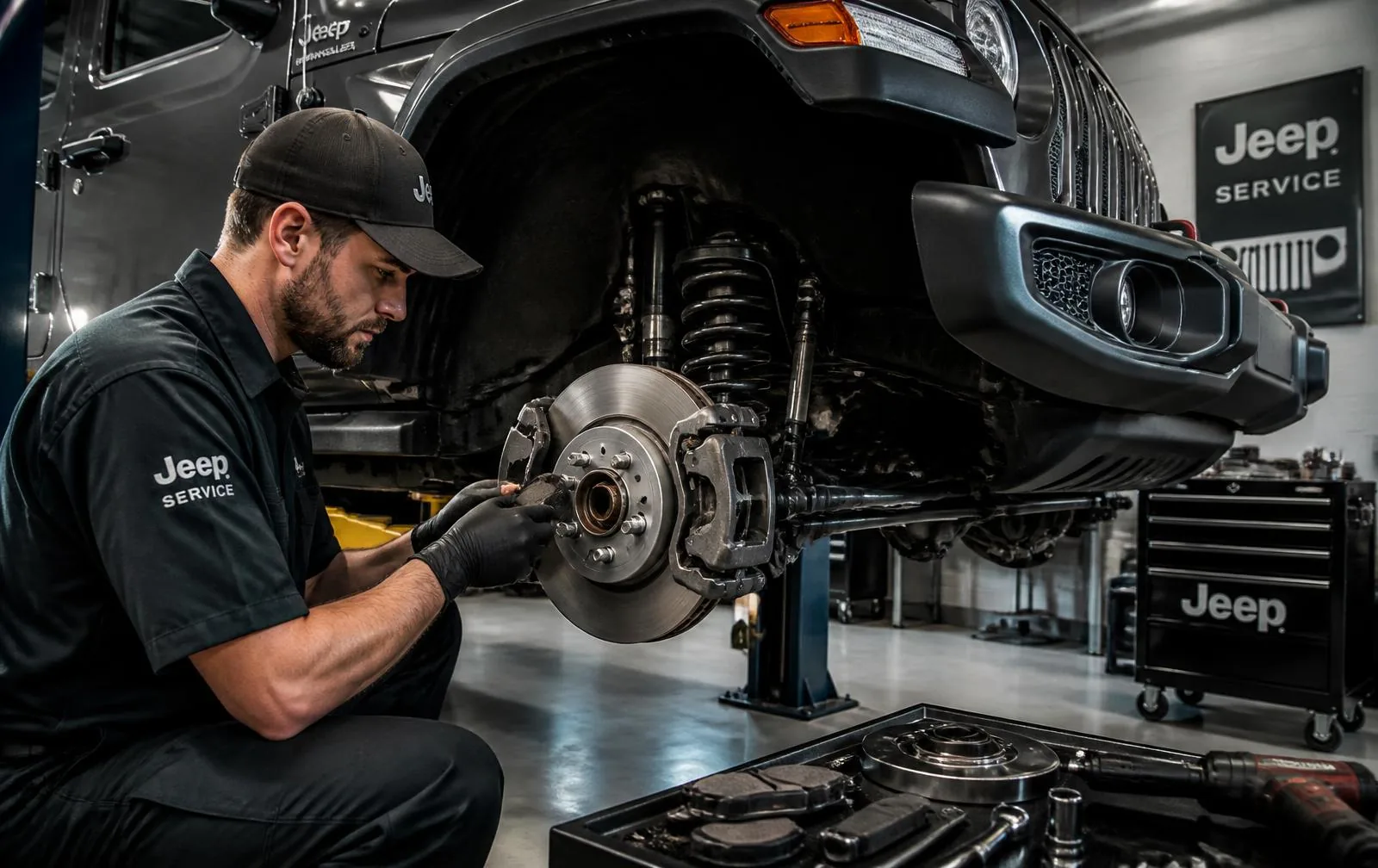
Extreme heat is especially tough on braking systems. Mountain descents and sudden stops in heavy traffic generate immense friction, which can glaze brake pads and boil old brake fluid. If you notice a soft brake pedal, squealing noises, or vibration when slowing down, it is time to have your system evaluated. You can easily book an appointment to schedule brake service with our factory-trained team, ensuring your stopping power is fully restored with high-quality components.
We are committed to helping you maintain your vehicle affordably. Before booking your next maintenance visit, be sure to check our current specials to view new Jeep specials2 on maintenance bundles, or browse our manufacturer incentives to view Jeep incentives on certified parts and services. For any questions regarding your vehicle's maintenance history or to book an urgent repair, you can reach out to our service advisors directly by giving us (888) 559-6420 a quick call. If you are ready to drop off your vehicle, you can easily get directions to Jeep Only located on West Sahara Avenue.
Service Directory
Jump to the Service You Need
Every Jeep service & maintenance topic, one click away.
Maintenance Intervals
What is the Recommended Maintenance Schedule for a Jeep Wrangler?
Adhering to a structured maintenance schedule is the single most effective way to protect your vehicle's longevity and preserve its resale value. The manufacturer recommends a primary service interval every 8,000 to 10,000 miles or every six months, whichever comes first.3 During this routine visit, technicians change the engine oil and filter, rotate the tires to ensure even tread wear, and perform a detailed safety inspection of the steering, suspension, and exhaust systems.
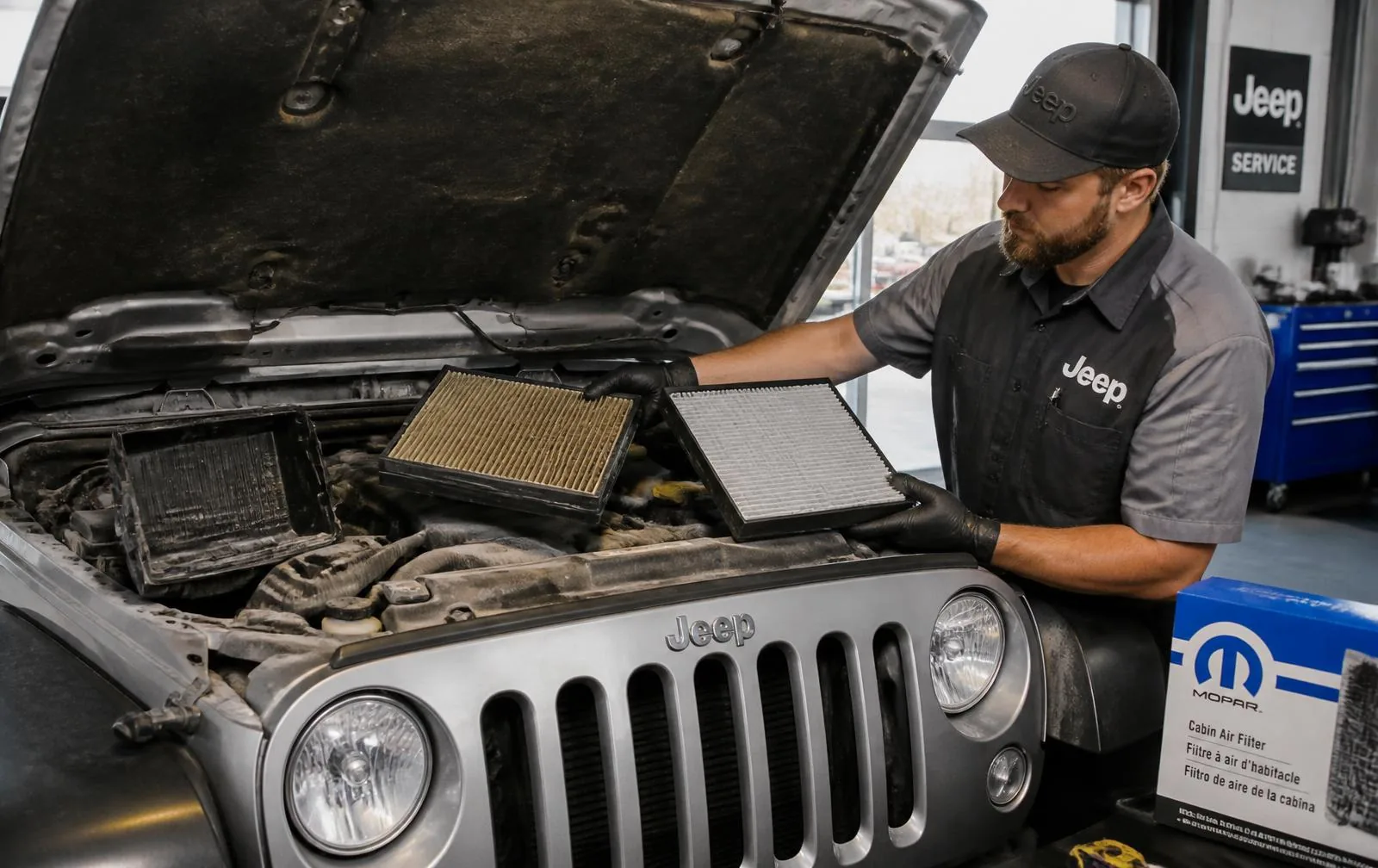
For vehicles operating in severe conditions—such as the intense heat of Las Vegas or the dusty, unpaved trails around Mesquite—more frequent service is highly recommended. Dust and sand act as abrasives, meaning engine air filters and cabin air filters require replacement much sooner than they would in milder climates. Additionally, frequent off-roading means your differentials, transfer case, and suspension joints should be inspected for dirt intrusion and fluid contamination at every oil change interval.
The long-term maintenance calendar expands as your vehicle accumulates mileage:
- At 20,000 miles: Inspect the front and rear suspension, tie rod ends, and boot seals. Replace the cabin air filter to keep desert dust out of your breathing space.
- At 30,000 miles: Replace the engine air filter. Inspect the transfer case fluid and CV joints.
- At 50,000 miles: Flush and replace the front and rear axle fluid, especially if you regularly engage in towing or deep water fording.
- At 100,000 miles: Replace the spark plugs and inspect the PCV valve. Flush and replace the engine coolant to prevent overheating in extreme summer temperatures.
Keeping up with these intervals ensures that complex mechanical components do not wear out prematurely. When your vehicle is approaching its next milestone, you can log online to schedule your oil change and filter replacement with our factory-trained team. For those interested in seeing how older platforms compare to the latest engineering standards, you can also browse our online showcase to view featured vehicles and explore current powertrain technology.
Fluids & Specs
Understanding Wrangler Engine Oil Types and Synthetic Requirements
Modern engines are engineered to incredibly tight tolerances, making the choice of engine oil critical to performance, fuel economy, and component protection. Most modern Jeep Wrangler models equipped with the 2.0L turbocharged engine or the 3.6L Pentastar V6 require full synthetic 0W-20 engine oil. This oil must meet the manufacturer's strict material standard, specifically MS-6395. Using oil that does not meet this specification can lead to engine deposits, reduced fuel efficiency, and potentially compromise your powertrain warranty coverage.4
- Recommended Viscosity
- 0W-20
- Material Standard
- MS-6395
- Engine Options
- 2.0L / 3.6L
- Oil Type
- Full Synthetic
Full synthetic oil is required because it maintains its viscosity and protective properties under extreme thermal stress. In hot desert climates, conventional oils can break down rapidly, thinning out and leaving critical engine components vulnerable to metal-on-metal friction. Conversely, synthetic oil flows easily during cold starts while remaining highly stable when engine temperatures climb under heavy loads, such as climbing steep mountain passes.
Our service department utilizes only premium, manufacturer-approved synthetic fluids and genuine filters designed specifically for your engine's configuration. When you bring your vehicle to us, you can trust that our team is utilizing the exact products your vehicle was built to use. If you want to learn more about the certified experts who will be working on your vehicle, you can meet our staff online to see our credentials and dedication to quality service.
4xe Electrified
How Often Does the Wrangler 4xe Hybrid System Require Battery Coolant Replacement?
The plug-in hybrid 4xe platform introduces advanced electrification to off-road driving, combining a traditional internal combustion engine with a high-voltage battery pack and electric motors. To keep the hybrid battery operating within its optimal temperature window, the vehicle utilizes a dedicated, high-capacity battery thermal management system. This system relies on a specialized hybrid battery coolant that prevents the battery cells from overheating during rapid charging, heavy acceleration, or high-temperature desert driving.
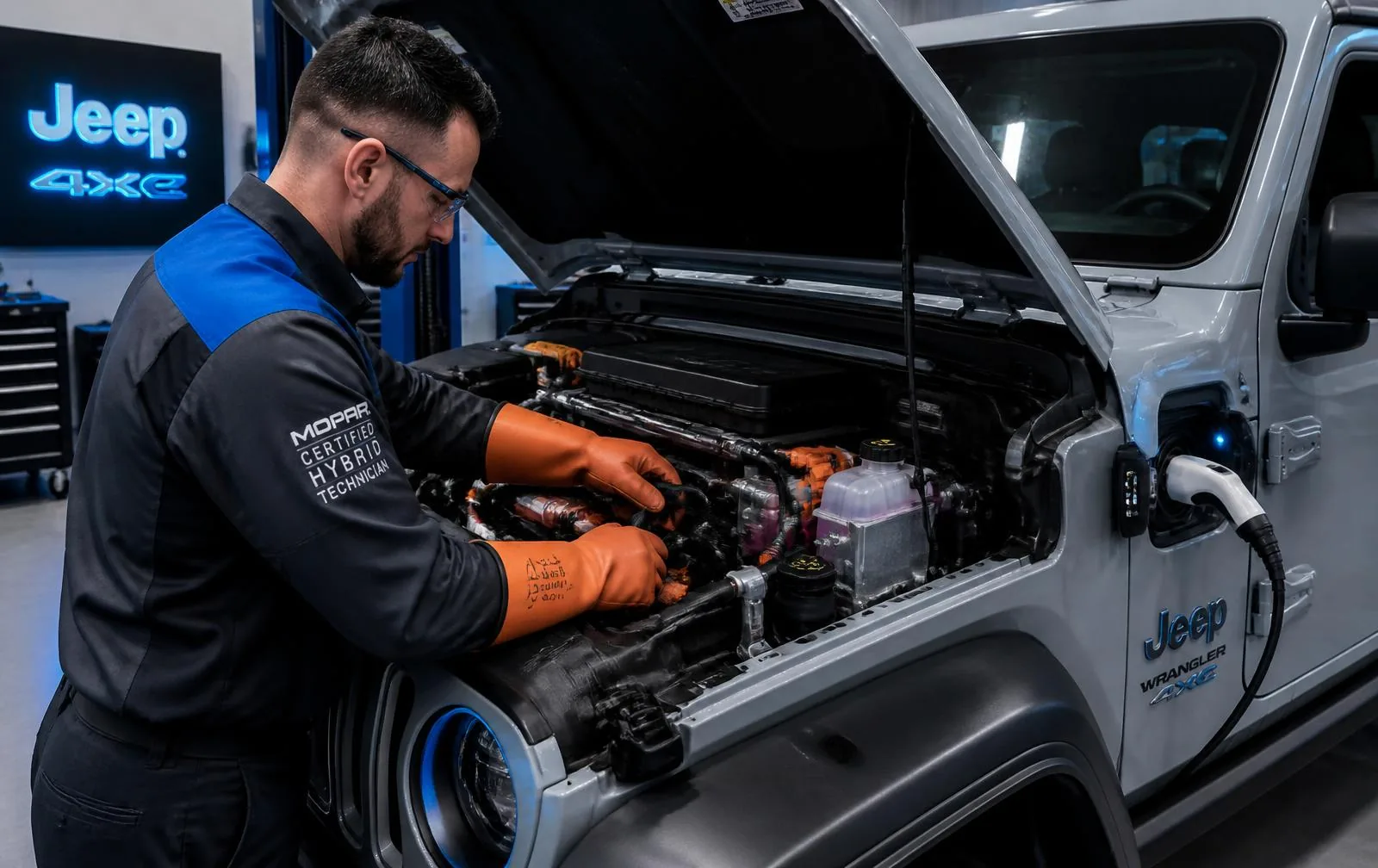
According to manufacturer specifications, the specialized coolant used in the hybrid battery cooling loop is highly durable but does require periodic attention. It must be inspected for proper level and concentration during your routine multi-point inspections. A complete flush and replacement of the hybrid battery coolant is recommended every 10 years or 150,000 miles, whichever occurs first.5 Because this procedure involves high-voltage systems and specialized purging equipment to prevent air pockets, it must be performed by certified hybrid technicians.
Neglecting the hybrid cooling system can lead to reduced battery efficiency, slower charging speeds, and accelerated degradation of the battery cells. If you need replacement caps, hoses, or specific fluids for your vehicle's cooling systems, you can easily order genuine Jeep parts directly through our website. To stay informed on the latest hybrid maintenance tips and brand updates, you can also read our latest news published by our dealership experts.
Towing & Warranty
Towing Specs and Warranty Protection: Do You Need a Transmission Cooler?
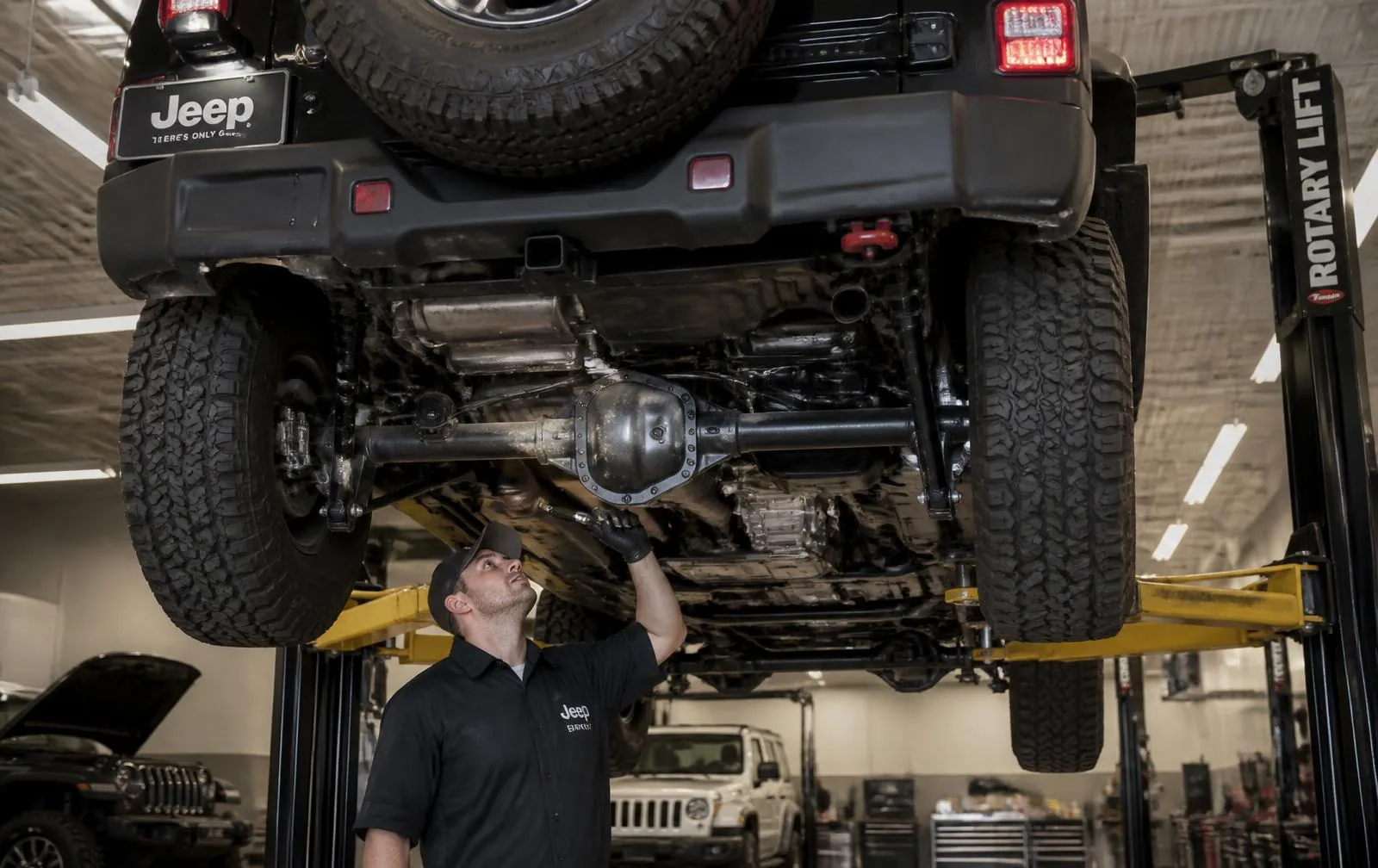
Towing a trailer or hauling heavy gear is a common use case for active owners, but it places significant extra stress on your vehicle's drivetrain. A frequent question among owners is whether towing will void the vehicle's factory warranty. The answer is straightforward: towing within the official weight limits specified in your owner's manual will not affect or void your factory warranty.6 However, exceeding the maximum towing capacity or failing to maintain the vehicle according to the "severe duty" maintenance schedule can lead to component failures that may not be covered under warranty.
- Model
- 2026 Wrangler
- Trim
- Sport S 4x4
- Horsepower
- 270 hp
- Torque
- 295 lb-ft
To illustrate these limits, the 2026 Jeep Wrangler Sport S 4x4 features a 270 hp engine and 295 lb-ft of torque, giving it robust capability when properly equipped. To ensure your vehicle is fully prepared for these loads, modern models equipped with the factory Trailer Tow package come direct from the factory with heavy-duty engine cooling and alternator upgrades. These built-in upgrades optimize airflow and heat dissipation, eliminating the need to install an aftermarket transmission cooler.
If you plan to tow frequently through hot mountain passes, our service team can inspect your cooling systems, hitch connections, and wiring harnesses to ensure everything is operating safely. To learn more about our commitment to keeping your vehicle safe and capable under all driving conditions, you can learn about our dealership online and our specialized fleet services.
Trim by Trim
Maintaining Style and Utility: Service Differences Between Sport and Rubicon Trims
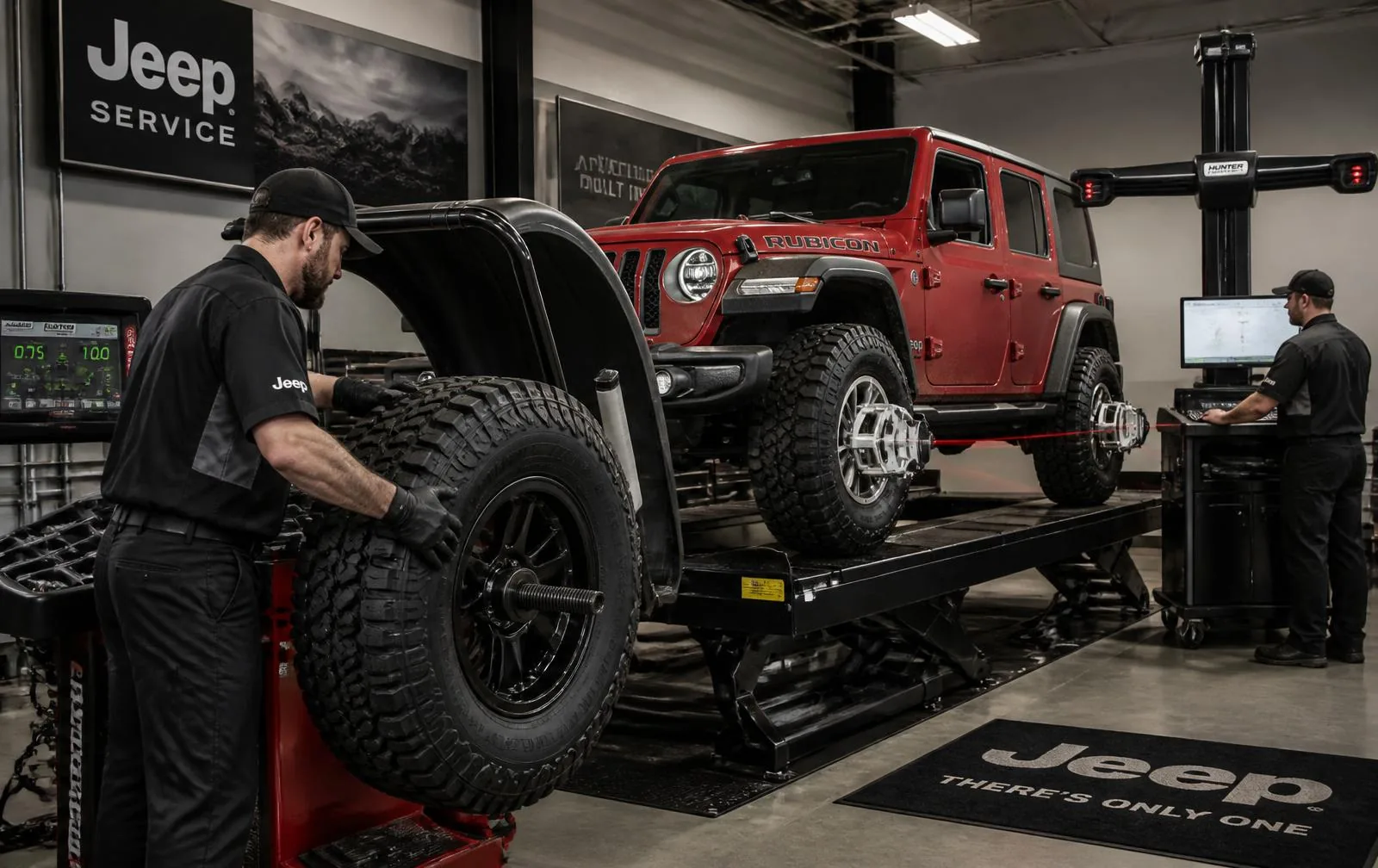
While all models in the lineup share the same core DNA, different trim levels feature distinct mechanical components that require unique service considerations. The Sport trim is designed for everyday versatility and moderate trail use, riding on smaller, street-oriented tires with standard suspension components. In contrast, the Rubicon is a dedicated off-road machine equipped with heavy-duty solid axles, electronic locking differentials, an electronic front sway-bar disconnect system, and larger, aggressive all-terrain tires.
These styling and mechanical differences directly impact how each trim is serviced:
- Tires and Alignment: The Rubicon's heavy all-terrain tires require frequent rotation and precise balancing to prevent uneven wear and cabin vibration. The Sport's street tires wear more evenly but still require routine rotation.
- Suspension and Steering: The Rubicon's electronic sway-bar disconnect and upgraded shocks require regular inspections to ensure the electronic actuators remain sealed against dust and moisture.
- Drivetrain Fluids: The locking differentials on the Rubicon require specialized gear lubricants and more frequent fluid changes if the vehicle is regularly driven through deep water or mud.
Understanding these mechanical distinctions ensures that your specific trim receives the exact care it needs to perform. If you are unsure which maintenance tasks are due for your specific model, you can contact our team online to speak with a service advisor who can look up your vehicle's specific maintenance requirements.
Answers in 30 Seconds
Quick Answers to Common Jeep Wrangler Maintenance Questions
If you have questions about maintaining your vehicle in the desert Southwest, our service department is always here to provide clear, transparent guidance.
Q: How much does a typical oil change cost for a Jeep Wrangler in Las Vegas?
An oil change for a modern model typically ranges from $80 to $150, depending on the engine option and the volume of oil required.7 This service includes premium full synthetic oil, a new OEM filter, and a comprehensive multi-point inspection of your vehicle's safety systems.
Q: Is full synthetic oil required for all Jeep Wrangler models?
Yes, modern engines are designed to run exclusively on full synthetic oil to meet manufacturer performance standards, protect internal parts in extreme desert temperatures, and maximize fuel economy. Always check your owner's manual or ask our technicians to confirm the exact viscosity required for your model year.
Q: How do I schedule a recall repair for my Jeep Wrangler in Las Vegas?
You can schedule any safety recall repair free of charge by calling our service department or booking an appointment online. Please have your 17-digit Vehicle Identification Number (VIN) ready so our team can verify the recall details and pre-order the required factory parts before your arrival.
Q: What should I do if my vehicle breaks down or has a flat tire?
If you experience an emergency on the road, you can contact the manufacturer's dedicated support line directly by calling Jeep Roadside Assistance: 800-521-2779. This service is included with your factory warranty and provides towing to the nearest authorized service center, flat tire changes, and emergency fuel delivery.
Q: How does the desert heat affect my vehicle's battery?
The extreme summer heat in Spring Valley accelerates battery fluid evaporation and internal corrosion, which can cause a battery to fail with little to no warning. We recommend having our technicians perform a battery charge and load test at every oil change to ensure you do not get stranded.
Q: How often should I rotate the tires on a Jeep Wrangler?
Rotate Wrangler tires every 5,000 to 7,500 miles, or at each oil change if you drive on gravel and rock regularly. Solid front and rear axles combined with heavy all-terrain tread make Wranglers prone to uneven cupping and feathering, and a five-tire rotation that includes the full-size spare keeps tread depth even across all positions so the four-wheel-drive system stays properly matched.
Q: Why does my Jeep Wrangler steering feel loose or wander on the highway?
Steering wander on a solid-axle Wrangler usually traces back to worn track bar bushings, loose tie rod ends, a failing steering stabilizer, low tire pressure, or an alignment that has drifted out of spec after trail use. Aggressive tires and lift kits amplify the effect. A steering and suspension inspection identifies the worn component before it becomes a safety issue, and our technicians can reset caster and toe angles to factory specification.
Q: What maintenance does a Jeep Wrangler need after a day of off-roading?
After a trail run, wash the undercarriage to remove abrasive sand and clay, then check the differential and transfer case fluid for a milky appearance that signals water intrusion. Inspect axle vent tubes, skid plates, U-joints, and CV boots for damage, re-torque wheel lug nuts, verify tire pressures after airing back up, and look for new fluid seepage. Bring the Wrangler in promptly if you forded water deeper than the axle housings.
Q: How long do brakes last on a Jeep Wrangler in the Las Vegas area?
Most Wrangler brake pads last roughly 30,000 to 50,000 miles, though heavy tires, added weight from armor or racks, mountain descents toward Kyle Canyon, and stop-and-go valley traffic can shorten that window considerably. Brake fluid absorbs moisture over time and should be tested at every service, since desert heat lowers the boiling point of contaminated fluid and produces a soft pedal.
Q: Does a Jeep Wrangler 4xe still need regular oil changes?
Yes. The 4xe pairs an electric drive system with a turbocharged gasoline engine, so it still requires full synthetic oil and filter changes on the standard interval, even when much of your daily driving happens in electric mode. Short engine run cycles and frequent cold starts make on-time oil service especially important, and our certified hybrid technicians also verify the high-voltage cooling loop and charge port condition during the same visit.
If you have additional questions or are ready to bring your vehicle in for professional care, feel free to visit our team at Jeep Only. You can always visit our homepage to explore our full range of certified maintenance services, or call our service department directly at (888) 559-6420 to speak with an advisor. For hands-on assistance, you can also get directions to Jeep Only and stop by our state-of-the-art service center on West Sahara Avenue.
Jeep Only · West Sahara Avenue
Book Your Wrangler Service Today
Certified technicians, genuine Mopar parts, and a service plan built for Mojave conditions.
Call (888) 559-6420- 1 Service appointments are subject to availability and advisor confirmation. Repair times vary by vehicle condition, parts availability, and shop capacity.
- 2 Advertised specials and manufacturer incentives are subject to change without notice, may require qualification, and cannot be combined with other offers unless stated. See dealer for complete details.
- 3 Maintenance intervals shown are general guidance. Always follow the maintenance schedule published in your vehicle's owner's manual for your model year, engine, and duty cycle.
- 4 Warranty coverage is administered by the manufacturer under its published terms. Use of fluids or parts that do not meet manufacturer specifications may affect coverage for related components.
- 5 Hybrid battery coolant intervals reflect manufacturer guidance and may differ by model year and driving conditions. High-voltage service must be performed by certified technicians.
- 6 Towing figures apply only to properly equipped vehicles. Never exceed the towing capacity, payload, or GVWR listed in your owner's manual. Towing capability varies by trim, axle ratio, and equipment.
- 7 Service pricing is an estimate only and excludes taxes, shop supplies, and disposal fees. Final pricing depends on engine, oil capacity, and parts required. Contact our service department for a written estimate.
*Vehicle pricing does not include taxes and license fee. Pricing includes $699 doc fee.
© 2026 Jeep Only. All rights reserved.