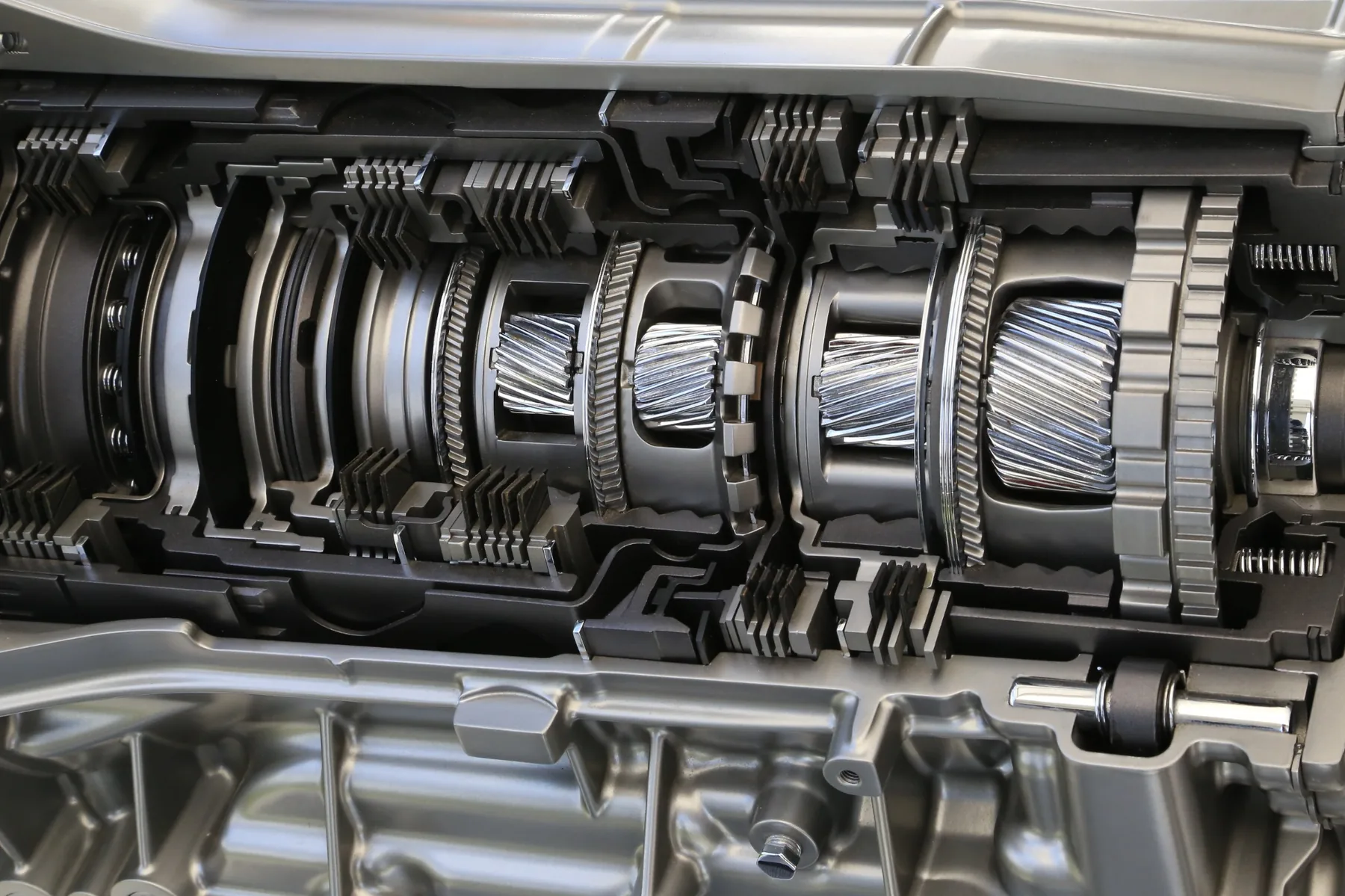
Desert Heat & Your GearboxInside a modern 8-speed automatic gearbox
Sustained high ambient temperatures place extreme stress on your vehicle's mechanical components. In the Mojave Desert, transmission fluid experiences rapid thermal breakdown, which directly degrades its lubricating properties. When operating in extreme heat, the fluid inside an 8-speed automatic transmission can easily exceed its optimal operating range. Once the fluid overheats, it loses the viscosity required to protect internal gears, clutches, and bearings from premature wear. 1
For local drivers navigating daily traffic or climbing steep desert grades, keeping the gearbox cool is essential for long-term reliability. The specialized cooling systems in modern vehicles require periodic inspection to ensure that road debris, dust, and mineral deposits do not block airflow or restrict fluid movement. If you notice your vehicle shifting harshly during the hottest parts of the day, it is a clear indicator that the system is struggling to manage internal temperatures.
Preventative maintenance is the most effective way to avoid catastrophic gearbox failure. Our factory-trained technicians understand the unique environmental demands of desert driving and can inspect, service, or replace your fluid to keep your vehicle running smoothly. If you are experiencing shifting issues or want to schedule a preventative inspection, you can easily find our service center on West Sahara Avenue, or speak directly with our service advisors by giving us a quick call today.
What Happens If You Never Change Your Jeep's Transmission Fluid?
Neglecting fluid maintenance leads to a predictable chain reaction of mechanical degradation. Over time, the fluid becomes heavily contaminated with microscopic metal shavings, friction material from clutches, and desert dust. This suspended debris acts as an abrasive slurry, actively wearing down precision valves, solenoids, and seals inside the valve body. As the fluid oxidizes from age and heat, it turns from a translucent red to a dark brown or black color, losing its ability to transfer pressure and dissipate heat.
Eventually, the lack of hydraulic pressure and lubrication causes the clutch packs to slip. When slipping occurs, friction generates intense localized heat, which can warp steel plates and destroy the friction material completely. Once this level of damage is reached, a simple fluid service will no longer fix the issue, and a complete rebuild or replacement becomes unavoidable.
Regular maintenance prevents these costly failures from developing. While you are planning your vehicle's upkeep, you can also book a routine oil change to have our technicians perform a comprehensive multi-point inspection. For drivers looking to maximize their ownership value, we invite you to explore our current maintenance and service specials or review the latest manufacturer service incentives to keep your vehicle running in peak condition without breaking the bank. 5
Know The Symptoms
Warning Signs of Transmission Wear and Limp Mode in Modern Jeeps
Recognizing the early symptoms of gearbox wear can save you from a sudden breakdown on the highway. Modern electronic gearboxes are highly sensitive to fluid levels and pressure variations. Common warning signs include delayed gear engagement, erratic shifting patterns, audible whining or grinding noises while in gear, and visible fluid leaks on your driveway. If the onboard computer detects a critical slip, an incorrect gear ratio, or an over-temperature condition, it will trigger a diagnostic trouble code and illuminate the check engine light.
To protect internal components from immediate destruction, the vehicle may enter a defensive operating state known as limp mode. In this mode, the computer commands the transmission to remain locked in a single forward gear—typically second or third—and limits engine speed. This allows you to safely pull off the road or drive slowly to a repair facility, but it indicates a severe fault that requires professional diagnostics. Low fluid levels are a frequent culprit behind limp mode, as the pump cannot draw enough fluid to maintain hydraulic pressure.
Addressing these issues promptly prevents minor leaks or sensor glitches from turning into catastrophic failures. Our parts department stocks everything needed for repairs, allowing you to get factory-certified components designed specifically for your model's powertrain. To learn more about our service philosophy and commitment to quality care, feel free to explore our main website resources where we outline our diagnostic capabilities and specialized technician training. 6
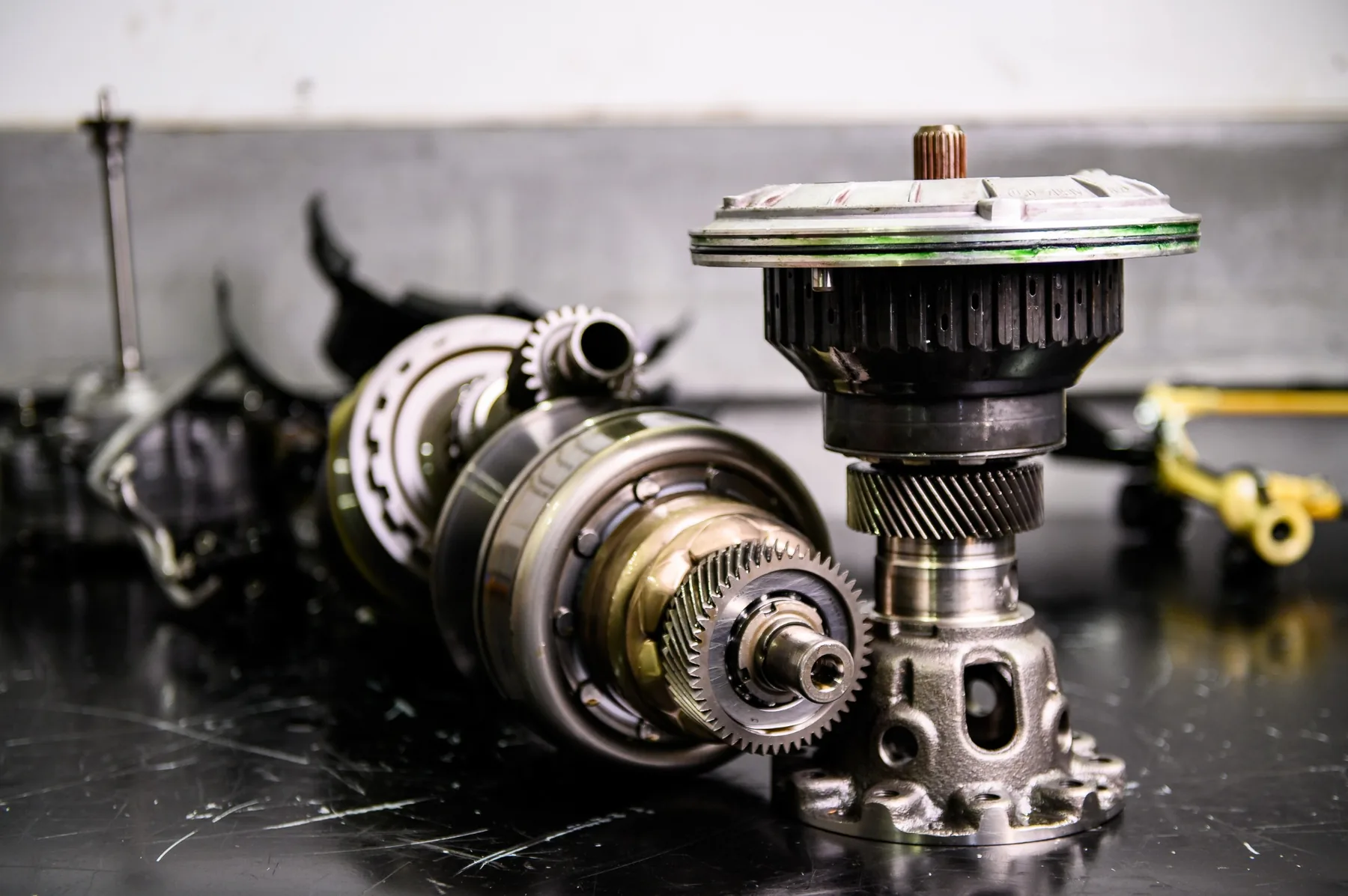
Fresh fluid restores hydraulic pressure and cooling
Comparing a Transmission Flush Versus a Standard Fluid Change
When servicing your gearbox, it is important to understand the technical difference between a standard fluid change and a full transmission flush. A standard fluid change is a gravity-drain procedure. The technician removes the transmission pan, replaces the internal filter, and drains the fluid housed in the pan. This method typically replaces about 40% to 50% of the total fluid volume, as a significant portion remains trapped inside the torque converter, cooler lines, and valve body.
A transmission flush, by contrast, utilizes specialized exchange equipment connected to the cooler lines to replace nearly 100% of the old fluid with fresh lubricant. While a flush is highly effective at removing old, oxidized fluid from the entire system, it is not always recommended for older, high-mileage vehicles. In gearboxes with pre-existing wear, the high pressure of a flush can dislodge accumulated sludge and debris, potentially clogging narrow passages in the valve body.
For most vehicles following a regular maintenance schedule, a standard pan service and filter replacement is the safest and most effective way to maintain hydraulic health. If you are driving a high-performance model or a heavily equipped utility vehicle, keeping the powertrain serviced ensures your vehicle remains dependable for years to come. Drivers interested in seeing how advanced powertrains are configured can examine our highlighted vehicle configurations to learn more about the heavy-duty cooling systems and gearboxes equipped on modern models.
Jeep Maintenance Schedules and Heavy Towing Service Intervals
Maintaining a strict service schedule is vital for vehicles operating under demanding conditions. Under normal driving conditions, manufacturers often recommend inspecting the fluid levels every 20,000 miles and replacing the fluid and filter around 100,000 miles. However, driving in the desert heat or using your vehicle for heavy towing completely changes these requirements. Under severe-duty schedules, the fluid and filter should be replaced every 60,000 miles to account for accelerated thermal breakdown.
Towing a heavy trailer or hauling heavy payloads forces the torque converter to slip more frequently to multiply engine torque, which rapidly elevates fluid temperatures. For example, when utilizing the maximum 6,200 lbs2 towing capacity of a 2026 Jeep Grand Cherokee or a 2026 Jeep Grand Cherokee L powered by the 2.0L engine, the 8-speed automatic is subjected to sustained high loads. Neglecting to shorten your service intervals under these conditions will dramatically shorten the lifespan of the gearbox.
Operating Condition
Fluid Inspection Interval
Fluid & Filter Replacement Interval
Normal Commuting
Every 20,000 miles
Every 100,000 miles
Severe Duty (Towing / Off-Road)
Every 10,000 miles
Every 60,000 miles
Our team of professionals is ready to help you establish the correct maintenance schedule based on your driving habits. You can schedule your maintenance appointment online to have our team evaluate your fluid condition. If you are preparing your vehicle for a heavy towing trip, you can also book a professional brake inspection to ensure your stopping power matches your towing capacity. To learn more about the experts who will be working on your vehicle, you can meet our certified service staff online before you visit.
Inside The Service Bay
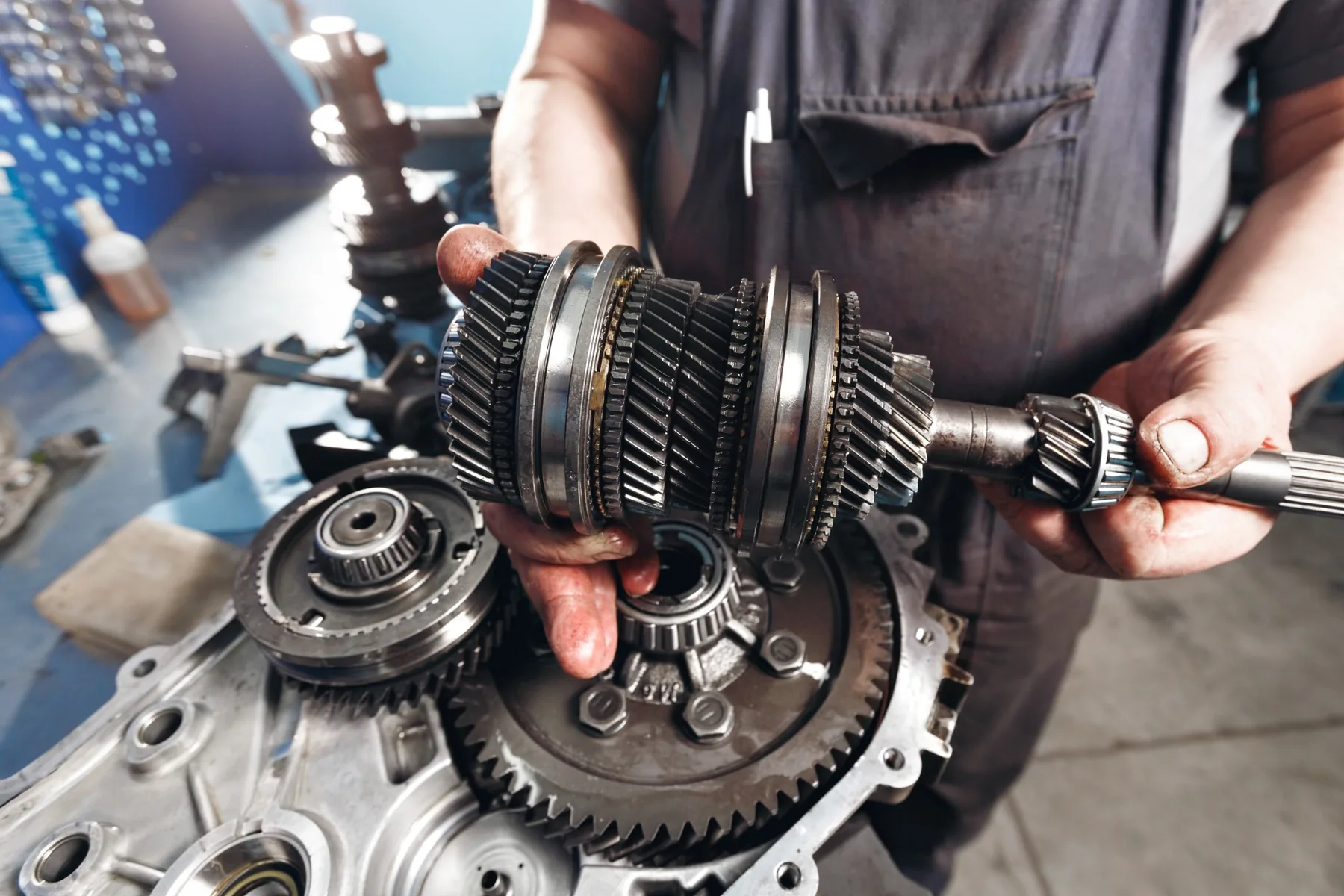
Hybrid drive units require factory tooling and training
Specialized Care for 4xe Hybrid Systems and Dealership Value
Hybrid powertrains, such as the 4xe systems, feature highly complex transmission assemblies that integrate electric motor-generators directly into the gearbox housing. These advanced systems require specialized high-voltage training, diagnostic software, and precise tooling to service safely and correctly. Independent repair shops rarely possess the proprietary technology or the factory-certified training required to work on these hybrid drive units, making dealership service the safest choice for hybrid owners.
At our dealership, we use only genuine Mopar fluids and OEM parts that are engineered specifically for your vehicle's exact trim and powertrain configuration. While independent shops may offer lower upfront prices by using multi-vehicle universal fluids, these generic lubricants often lack the precise friction modifiers required for smooth clutch engagement and optimal thermal management. Using the wrong fluid can lead to shuddering, accelerated wear, and can potentially void your manufacturer warranty. 4
Choosing dealer service guarantees that your vehicle is being cared for by factory-trained specialists who perform these complex procedures every day. To understand our commitment to technical excellence and customer transparency, we invite you to learn about our service standards and history. You can also read our latest service updates to stay informed on the best ways to care for your vehicle's advanced hybrid or conventional powertrain.
Quick Answers Before You Visit
Q: How long does a standard transmission fluid service take?
A: A professional transmission fluid and filter replacement typically takes between 1.5 to 3 hours to complete. This timeframe allows our technicians to safely hoist the vehicle, drain the pan, replace the internal filter and gasket, clean the pan magnets, and refill the system with fresh fluid to the precise operating level.
Q: What is the typical cost of a full transmission replacement?
A: A complete transmission replacement for a modern vehicle generally ranges from $4,500 to $7,500, depending on the specific model and powertrain. This cost includes a brand-new or remanufactured assembly, specialized fluids, and the intensive labor required to program the new electronic control module to your vehicle. 3
Q: Is it worth replacing the transmission on an older vehicle?
A: If the estimated cost of replacing the transmission exceeds 50% to 60% of your vehicle's current market value, transitioning to a newer vehicle is often the more practical choice. Our team can evaluate your vehicle's overall mechanical health to help you make an informed decision about whether to repair or replace.
Q: Does a powertrain warranty cover transmission repairs?
A: Yes, major internal transmission components, including the case, torque converter, oil pump, and internal seals, are covered under the manufacturer's powertrain warranty. This coverage applies as long as the vehicle is within the warranty period and has been maintained according to the recommended factory schedule.
Q: Can I check my transmission fluid level at home?
A: Most modern automatic transmissions are sealed units that do not feature a traditional under-hood dipstick. Checking the fluid level requires hoisting the vehicle, bringing the transmission up to a specific operating temperature, and checking a fill plug on the side of the case, which is best handled by certified technicians.
Q: Why does my Jeep shudder lightly at steady highway speed?
A: A faint vibration that appears around 40 to 55 mph and disappears when you touch the throttle is usually the torque converter clutch cycling on worn or heat-glazed fluid. Because the converter clutch stays partially applied for fuel economy, degraded friction modifiers show up here long before you feel a hard shift. A fluid and filter service with the correct Mopar specification often clears it, though our technicians will scan converter slip data first to rule out a failing solenoid.
Q: Does trail running at Red Rock or Logandale count as severe duty?
A: It does. Low-range crawling, deep sand, and long climbs keep the gearbox loaded while airflow across the cooler is minimal, so fluid temperature climbs even at walking speed. Add fine desert silt packing the cooler fins and the system loses heat-rejection capacity quickly. Trail-driven Jeeps should follow the severe-duty column in the table above and have the cooler and vent tube cleaned after dusty or water-crossing outings.
Q: Which transmission fluid does my Jeep actually require?
A: Specification varies by gearbox rather than by model year alone, so a Wrangler, a Gladiator, and a Grand Cherokee sitting side by side can each call for a different fluid. Our advisors verify the requirement against your VIN before anything is poured, and we stock the matching genuine Mopar fluid. Universal or "works in everything" lubricants may look similar on the shelf but carry different friction characteristics that change how the clutch packs engage.
Q: Can a transmission be repaired instead of fully replaced?
A: Frequently, yes. Many complaints trace back to a single solenoid pack, a leaking pan gasket, a failed speed sensor, or a control module that simply needs reprogramming, and those repairs cost a fraction of an assembly swap. Full replacement becomes the honest recommendation only when internal hard parts are damaged, which we confirm by inspecting the pan debris and reviewing pressure data before quoting anything.
Q: How can I keep fluid temperatures down during a Las Vegas summer?
A: Small habits help more than drivers expect. Shift to neutral or park rather than holding drive at long signals, avoid riding the brake on grades in a locked gear, keep the front fascia and cooler clear of dust and bug buildup, and let the powertrain idle briefly after a long tow before shutting down. If you tow often, ask our advisors whether an auxiliary cooler is available for your configuration.
Factory-trained technicians, genuine Mopar partsJeep Only Service Center
Trust Jeep Only for Your Transmission Service
Keeping your powertrain healthy is the key to enjoying uninterrupted desert adventures and reliable daily driving. At Jeep Only, our factory-trained technicians have the specialized tools, genuine Mopar parts, and diagnostic expertise required to keep your gearbox shifting flawlessly. Whether you are driving a conventional 4x4 or an advanced hybrid system, we provide transparent service recommendations designed to protect your vehicle and your budget.
Do not wait for a minor shifting issue to turn into an expensive replacement. If you are noticing delayed shifts, fluid leaks, or simply want to verify your fluid health before a long road trip, we are here to help. You can easily contact our service team to ask questions, or use our online tools to book your next appointment. When you are ready to visit, you can get easy directions to our service center on West Sahara Avenue, where our knowledgeable staff will ensure your vehicle is ready for whatever road lies ahead.